AI & multiomics
Machine Learning, Deep Learning, AI and statistical frameworks for integrating genomics, transcriptomics, microbiome, clinical and imaging-derived data.

Artificial Intelligence | Bioinformatics & Biostatistics | multiomics | precision medicine | cancer research
I help biomedical teams transform complex omics, clinical and imaging data into interpretable models, reproducible analyses and translational insight.
Postdoctoral Research Assistant at GMEG (CNIO, CIBERONC), working at the intersection of cancer research, microbiome, spatial transcriptomics and biomedical Artificial Intelligence (AI).
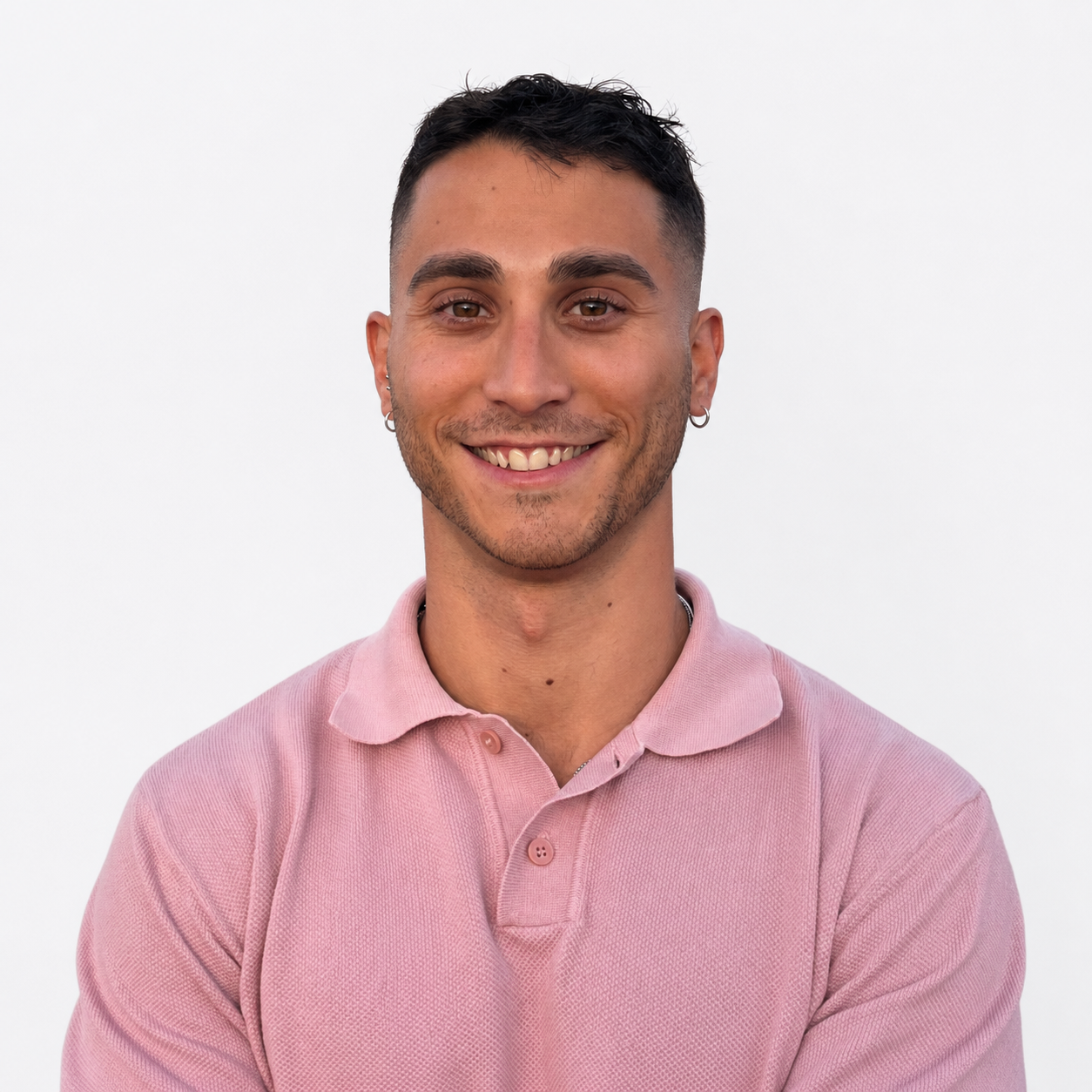
I am a bioinformatician and biostatistician with a PhD in Biomedical and Biotechnological Sciences. My work connects statistical modelling, Machine Learning, Deep Learning and AI with biomedical research to make high-dimensional data more useful, interpretable and reproducible.
I work on cancer research, liquid biopsy, molecular classifiers, microbiome and virome analysis, and spatial transcriptomics. My focus is building AI-driven methods, reproducible software and clinically oriented data products that can move from analysis to translational impact.
Current affiliation: Genetic & Molecular Epidemiology Group (GMEG) - Spanish National Cancer Research Center (CNIO) and Centro de Investigación Biomédica en Red Cáncer (CIBERONC).
Machine Learning, Deep Learning, AI and statistical frameworks for integrating genomics, transcriptomics, microbiome, clinical and imaging-derived data.
Computational methods for cancer detection, molecular classification, liquid biopsy and translational oncology, with applications across cancer research and clinically oriented biomarker development.
Study design, survival analysis, Bayesian statistics, causal thinking, modelling, visualization and publication-ready interpretation.
R, Python, Linux, workflow design, containerization, version control, LLMs, coding agents, reports and pipelines that make scientific analysis transparent, maintainable and reusable.
R package and Shiny application for applying published pancreatic cancer molecular classifiers, the new PDAConsensus model and translational classification workflows.
Consensus model developed to integrate existing pancreatic cancer molecular classifiers into a unified framework for reproducible subtype assignment.
AI-assisted intelligence system with a private daily dashboard for news curation and scoring, plus a public weekly digest for scientific, biotech and AI signals.
Private web app tracking biological sample collection and multiomics analysis status across six partner institutions (UKE, UT, UU, MUG, QMUL, CNIO) in the PANCAID pancreatic cancer early-detection consortium.
Private LaTeX Documents and Quarto Slides systems for brand-aligned manuscripts and presentations, plus an internal CV/profile sync system keeping CVN, CV, ORCID, GitHub, website, LinkedIn, ResearchGate and Google Scholar aligned.
ORACLE, LORE-AI and the virome bioinformatics pipeline are being developed as additional AI-oriented biomedical software systems.
Find my publication record and academic profiles through Google Scholar, ORCID, ResearchGate, PubMed and my CVN.
I write about scientific and technical topics around AI, multiomics, precision medicine, cancer research and computational biology, translating new methods into practical biomedical context.
I also write about personal growth, consistency, decision-making and the habits behind a sustainable scientific career.
Short, applied reflections on papers, models and biomedical AI tools.
Notes on focus, sport, routines and long-term professional development.
Awards. Extraordinary Doctorate Award, Talento Joven Riojano 2024, first prize for best Master's Thesis at the 6th Datathon of the 9th Bioinformatics Conference, and SEIMC best communication award.
Roles. Ambassador of the European Association for Cancer Research (EACR) and mentor/advisor at Nucleate Spain.
Memberships. SEBiBC, ISCB/RSG-Spain, International Biometric Society, Sociedad Española de Bioestadística, EACR, IAP, EPC, ALIPANC and SCOURGE Cohort Group.
AI for cancer research, liquid biopsy, microbiome, spatial transcriptomics and clinically oriented data products. CNIO appointment from July 2023 and CIBERONC appointment from October 2024.
Microbiota analysis at the Center for Biomedical Research of La Rioja, supporting biomedical projects with bioinformatics, statistical analysis and reproducible outputs.
Characterization of gut bacteriome and virome in HIV infection, inflammation and cardiovascular risk, including doctoral research stays at the Laboratory of Viral Metagenomics, Rega Institute, KU Leuven.
PhD in Biomedical and Biotechnological Sciences, with Cum Laude, International Doctorate Mention and Extraordinary Doctorate Award. Master's training in Bioinformatics and Computational Biology, Biostatistics, Artificial Intelligence and Deep Learning, and Chemistry and Biotechnology. Degree in Biochemistry.
I support academic and translational teams that need rigorous, reproducible and publication-oriented help with complex biomedical data. Engagements are scoped privately according to project goals, timelines and data complexity.